 3 / S C
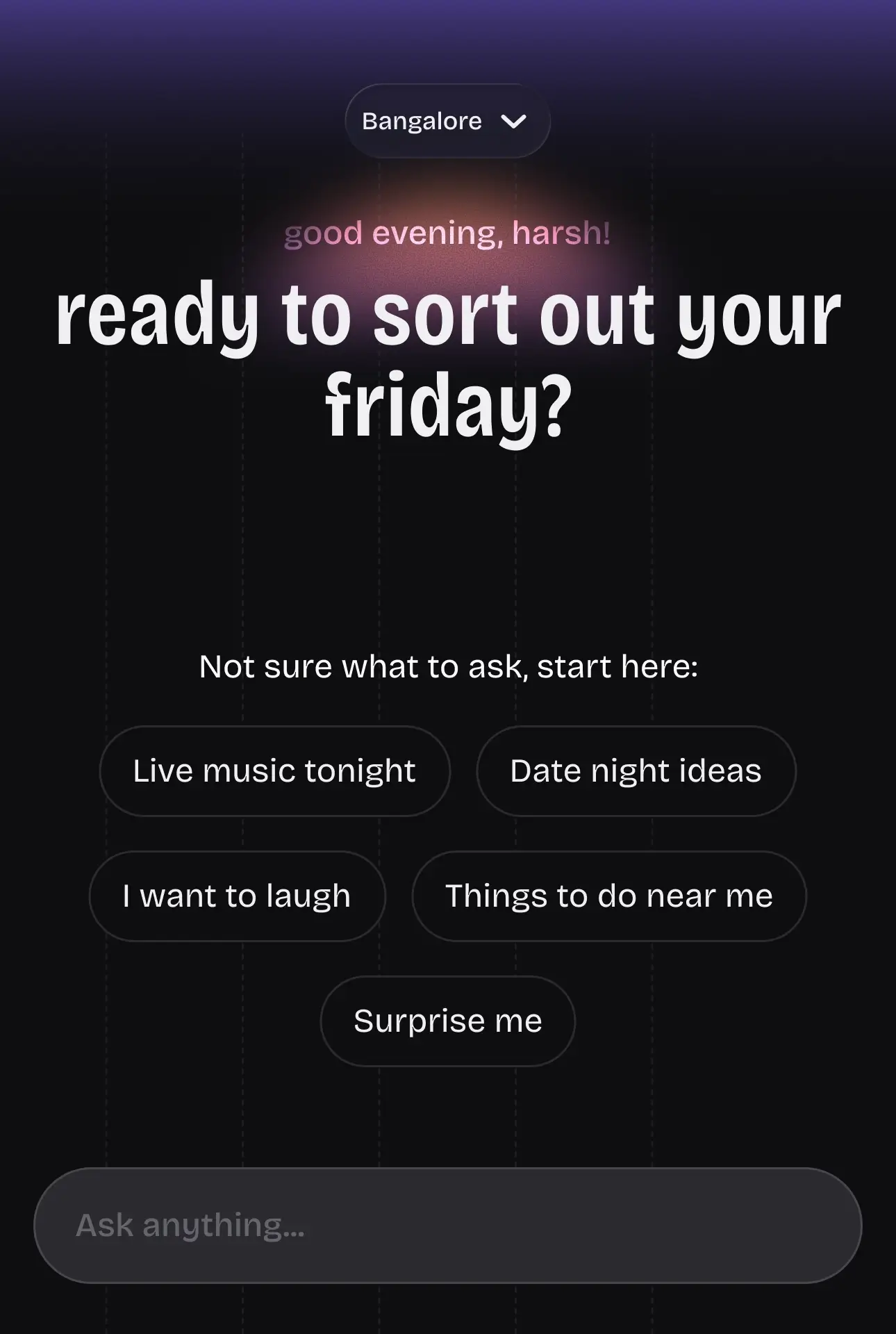
There’s a peculiar kind of paralysis that sets in around 7PM on a Friday. You want to do something, go somewhere, make this evening count. So you open an app, scroll, yet nothing feels quite right. You open another. Ninety minutes later it is 7:45pm. You’re still on the couch, visibly antsy, no closer to a decision than you were at 7pm.
This isn’t a discovery problem: the city has plenty going on. The apps have all of it. The problem is in the space between knowing you want to go out and actually going.
This Decision Gap is one of the most underdesigned problems in consumer technology.
What apps are actually built for
Most discovery products assume one of two things. Either the user arrives knowing what they want, and the job is retrieval. Or the user doesn’t know what they want, and the job is to show them more options until something clicks.
Neither works for experiential purchases. You can’t search for “something fun for a first date that isn’t too loud” because systems are not designed to parse that input. And showing someone more options when they’re already overwhelmed pushes them closer to the edge than nudging them back.
General-purpose AI has made this worse in a specific way. Conversational AI is designed to open new branches of inquiry, to explore, to generate more. That’s genuinely useful for research or open-ended problems. But for someone who wants to decide what to do tonight, it’s the wrong shape entirely. More conversation is the enemy.
The design problem criminally being ignored across the board: how do you design an experience with AI that closes conversations rather than opens them? We call this Decision Compression, and it’s the principle Orion is built around.
The concierge model: AI designed for decisions
A client brief came into the studio earlier this year. They wanted to build an events platform for people tired of opening five different apps every time they wanted to plan something. The underlying question was: what should the AI actually be doing here?
The model we kept returning to was the concierge. Not the kind with a laminated list, but the kind who knows the city, reads the room, and when you say “somewhere for a first date” doesn’t ask you to fill in a form. They make a suggestion. You react. They adjust. Three exchanges later you have a plan.
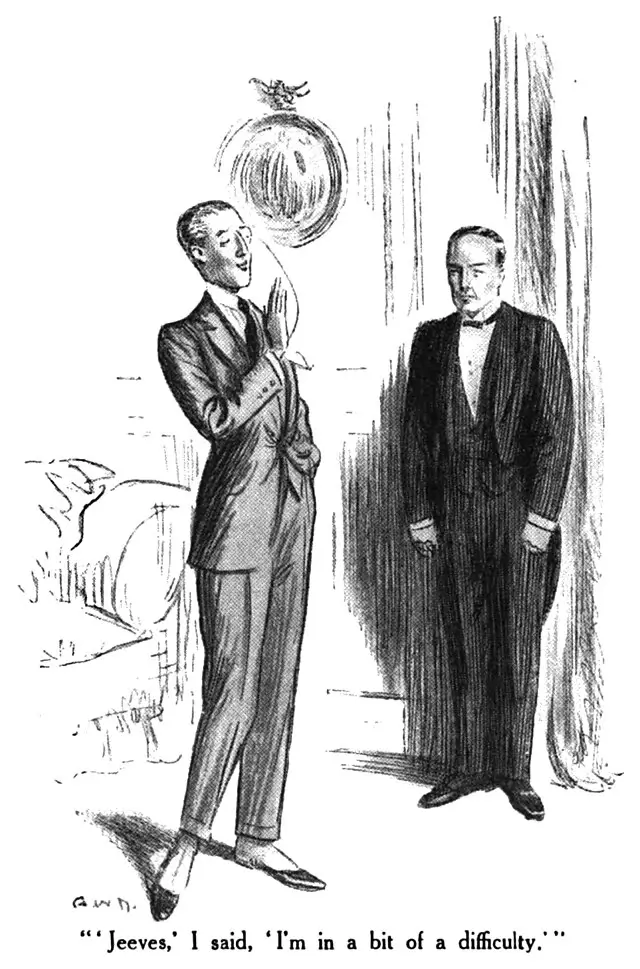 Arthur Wallis Mills, Public domain, via Wikimedia Commons
The reaction is the thing. Showing someone a loud rooftop bar and watching them say “no, something quieter” tells you more about what they want than ten minutes of upfront questions. The response to a concrete option carries information that no abstract question can extract.
How this became Orion
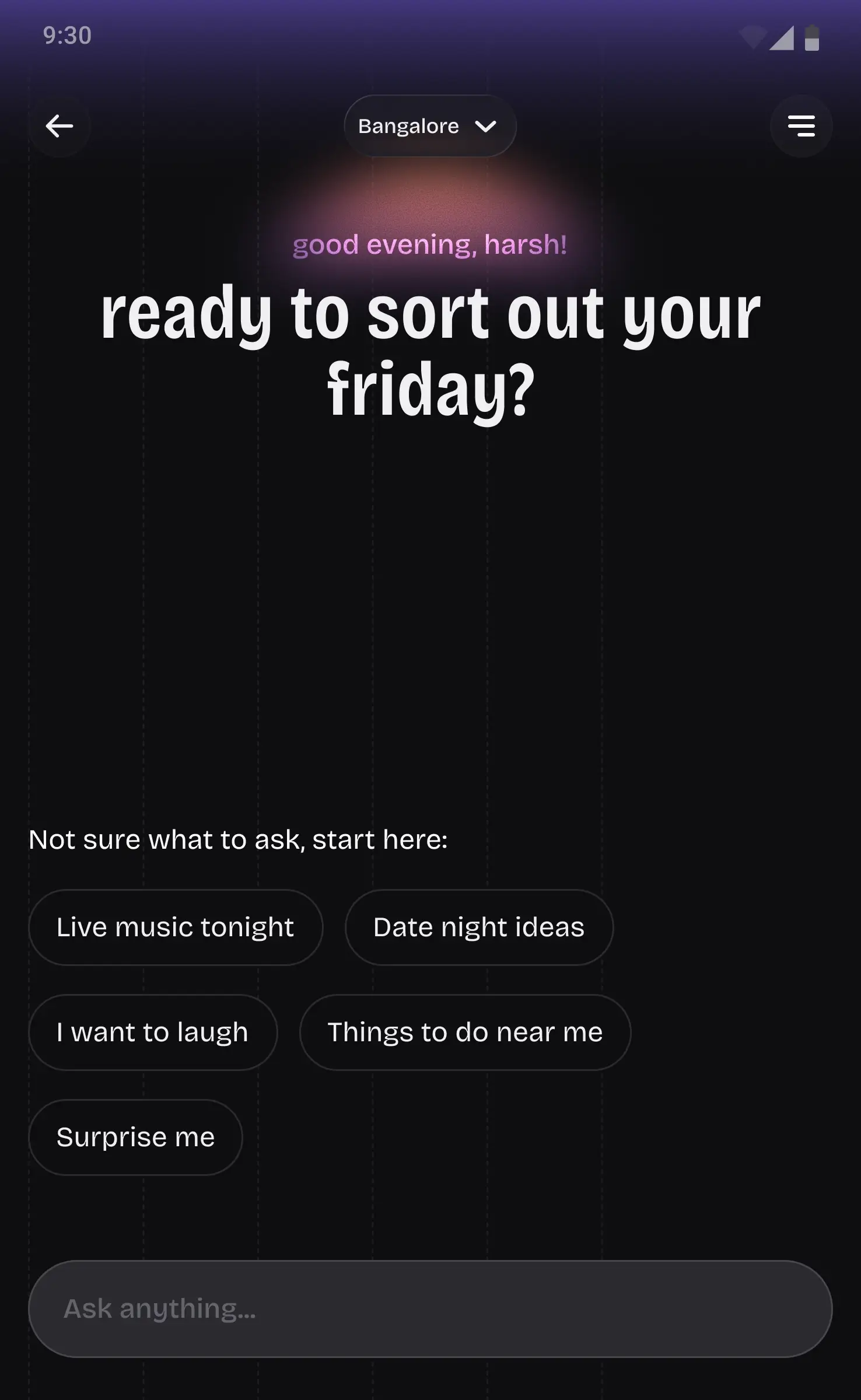
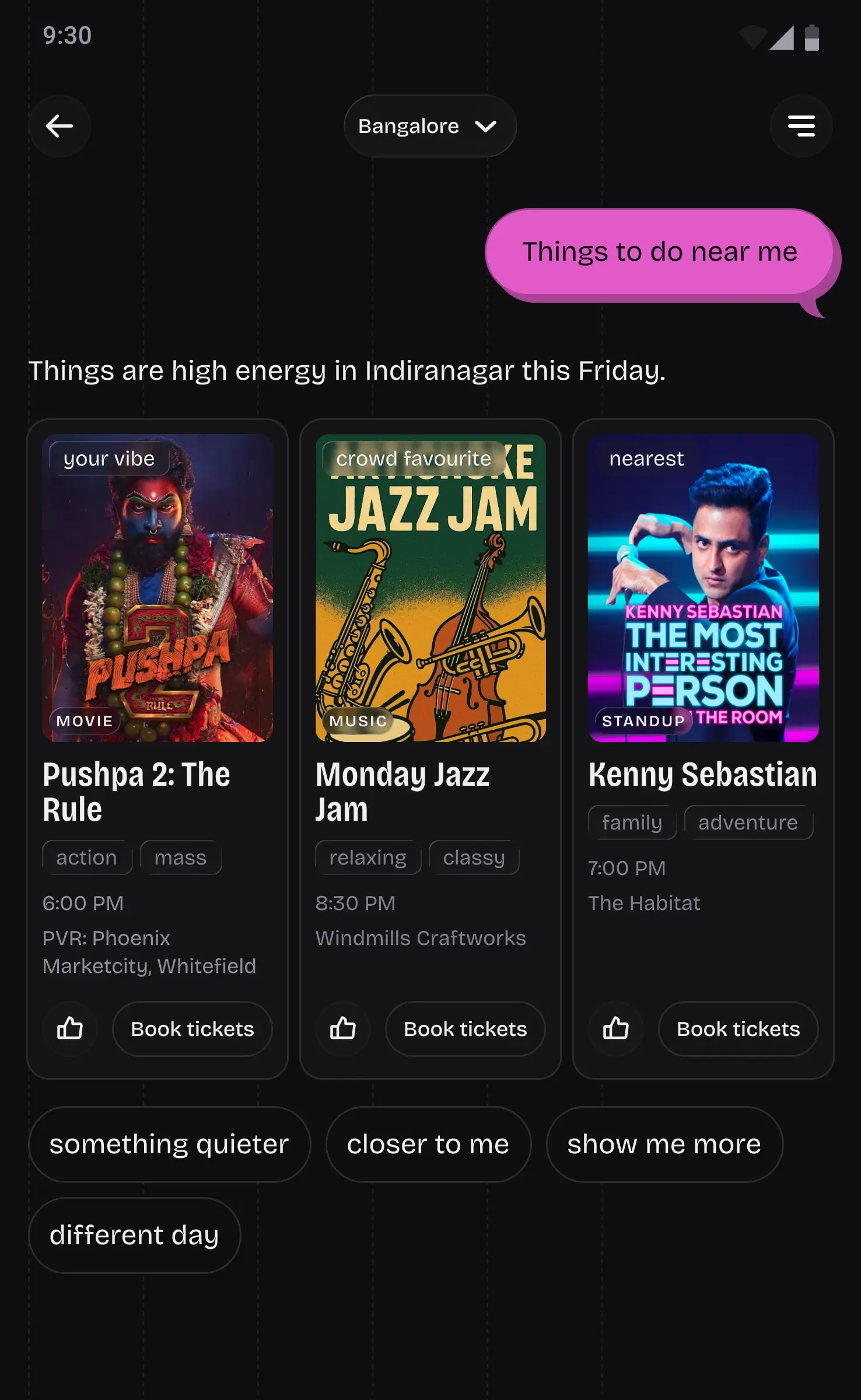
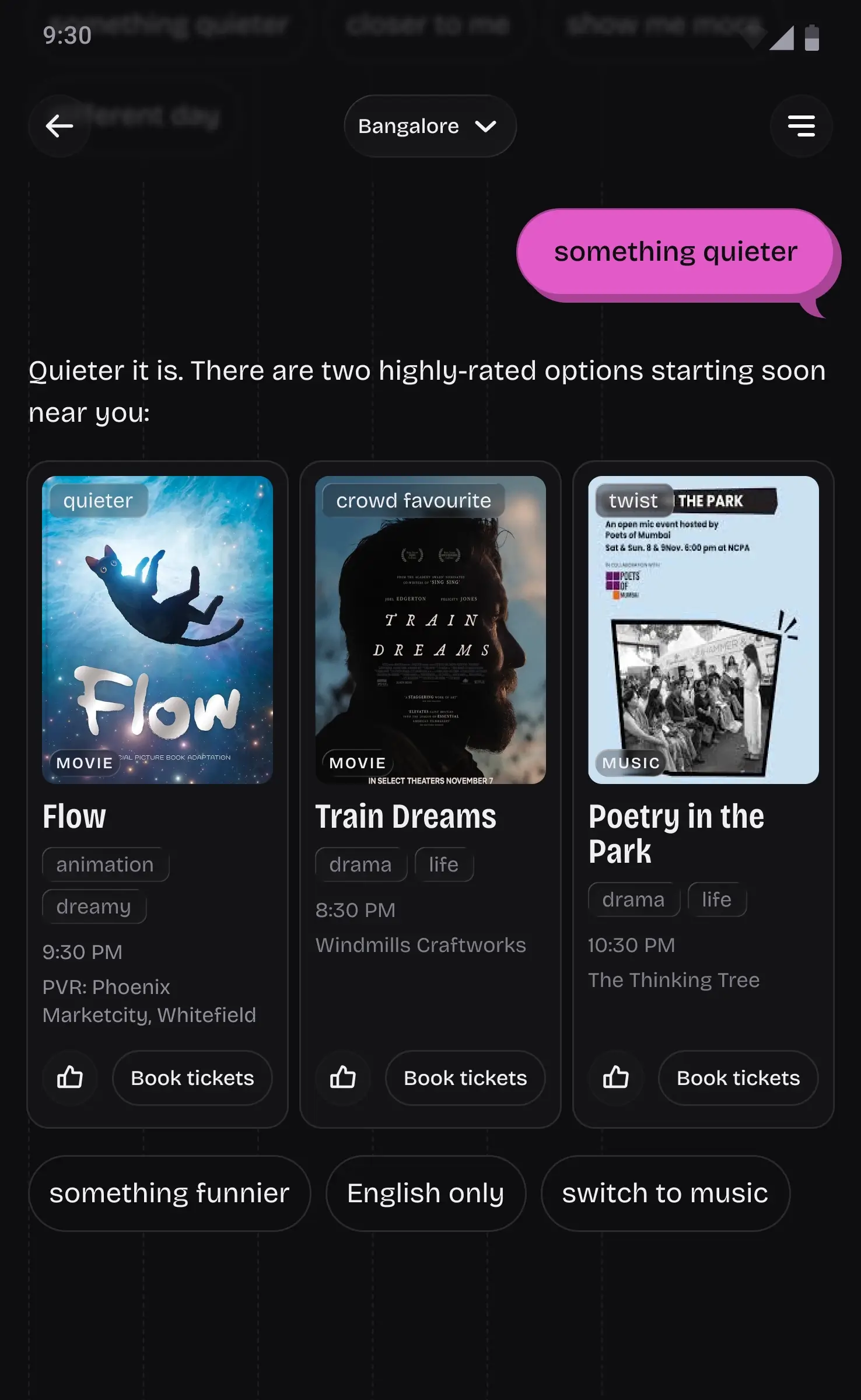
We built this out as Orion, an events platform whose conversational layer we call the Concierge. A single input bar handles both: a specific search query returns direct results, while a more open prompt like ‘something for a first date’ or simply ‘surprise me’ hands off to the Concierge, which responds with exactly three results, each with a distinct role: the system‘s most confident pick, the popular choice, and a deliberate outlier whose job is to make the first two feel more considered by comparison.
- The Anchor Card: The system’s most confident recommendation. Best match to known context and stated constraints.
- The Breadth Card: The popular choice. What most people in this context are doing. Example: Highest demand or Most Booked
- The Contrast Card: A deliberate outlier. When selected it helps expand the system’s knowledge about the user. Example: Different vibe, lower cost, or different format.
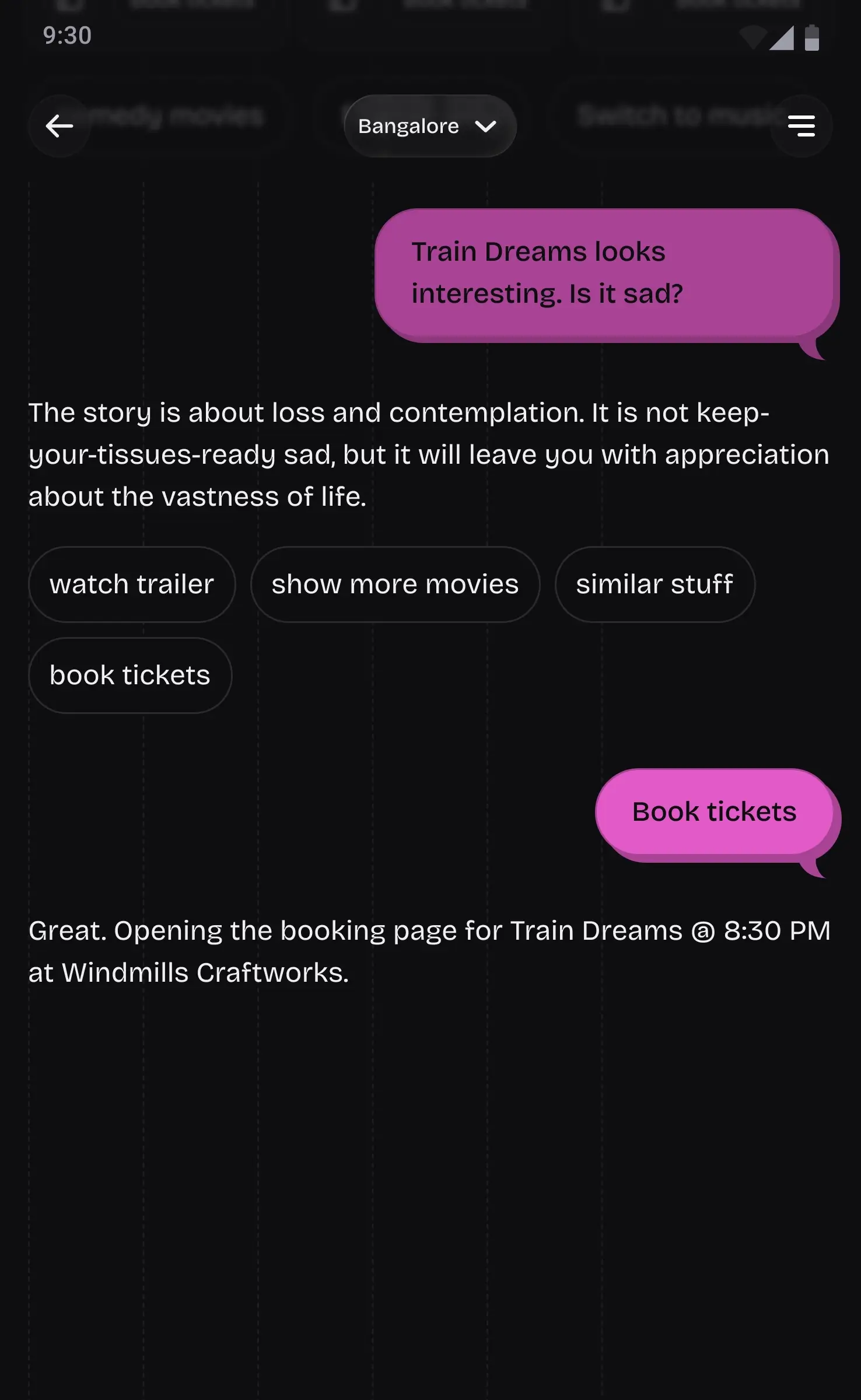
Users steer from there through one-tap critique chips generated from what’s on screen rather than a fixed filter list. The system shifts without resetting context, each turn building on the last. The design target is three conversational turns from cold start to confirmed booking.
Taste Profile
Underneath this, the system builds a preference model from behavioural signals rather than declared preferences. A user who calls themselves an EDM fan but books jazz three times running is demonstrating something more reliable than what they’d answer in a survey.
This is Orion’s Taste Profile: a model built from what you do on the platform, not only what you say. It manifests in two separate places: explicit answers to a small set of questions that the system cannot infer on its own; and behavioural signals from each session. This distinction matters as the personalization system is built to learn and update itself over a lifecycle’s worth of behaviour and not one-off bookings or profile-level data.
Where else this pattern applies
The Friday evening problem isn’t specific to events. It appears anywhere a user arrives with genuine intent but without a formed plan, and where the existing interface responds with either a catalogue or a search bar. We call this “vibe-based discovery.”
Fashion Retail
Someone on Myntra or Ajio looking for something to wear to a wedding doesn’t know the right search term. They know the occasion, the rough budget, the feeling they’re after. A system that makes a confident first suggestion and reads the reaction, ‘too formal’, ‘wrong colour’, ‘not my style,’ would move them to a decision faster than any filter combination.
Food-tech e-Commerce
Deciding what to eat is probably one of the most overwhelming problem for a lot of people, and it multiplies in complexity while ordering online or going out for dinner. For platforms like Zomato, Swiggy, a concierge could be a game-changer.
OTT platforms, Entertainment
With this, streaming platforms could get people from adding things to watchlist to actually watching stuff. I am sure I am not the only one! And then, similar problems exist within the ecosystem with Letterboxd and Justwatch: how to decide what to actually watch?
Finance Advisor platforms
Someone choosing between mutual funds or insurance products on a fintech platform has intent but not the vocabulary or the confidence to query correctly. A concierge model that asks one clarifying question, makes a recommendation, and explains the reasoning in plain language is a fundamentally different product from a comparison table.
The interaction model becomes as pivotal for the product as the catalogue, the AI model underneath, and the recommendation algorithm. The decision about what the AI should be doing in each moment determines everything else: what gets shown, in what order, how the user moves through it, what the system learns. And this is a product and design strategy decision that can elevate your experience.
What this means for your product
Your users either know what they want or they don’t. When they do, better search gets them there faster. But your users have intent without a plan, desire without vocabulary, a smarter catalogue would not help close the Decision Gap between wanting to act and actually acting. Something has to make the first move, reads the reaction, and step back once the decision is made.
That’s what we built for events. It can be applied more broadly — from financial planning platforms to fashion stores; from food delivery to travel — and we’re interested in the products where it might. Decision Compression is a pattern, not a product. If you're building something around it, we’d love to know.
We’ve written a detailed framework document on the design approach behind Orion. Available on request.