 3 / S C
In 2021, we started an extensive research project for one of the world’s biggest e-commerce platforms that was looking to enter the Indian market.
We approached this through three distinct tracks: first, a competitive analysis of five Indian platforms; second, qualitative interviews to explore key buying journeys; and third, a focused analysis from designers who create products for India on a daily basis. We intentionally kept these tracks separate to avoid any cross-influence until we were ready to synthesize the findings.
Our 20 interviews covered participants aged between 22 and 41 across cities like Mumbai, Hyderabad, Bengaluru, Delhi, Goa, Kolkata, Jaipur, Pune, and Ahmedabad; covering both tier-1 and tier-2 cities, to capture a variety of buying behaviors across income levels.
Some of the findings confirmed our initial concerns. The platform wasn’t tailored for the Indian market: there was no pricing in INR, no UPI options, and no cash on delivery. These were valuable assurances to build a case within the organization.
But we nearly overlooked the most intriguing discovery.
Five-star ratings, in India, don’t directly mean trust.
Indian online shoppers are compulsive filters. Most of them won’t even consider a product with less than 4 stars. The rating filter is usually one of the first things they click. On the selling side of operations, online platforms often require high ratings and penalize sellers who don’t meet the mark.
But there’s a twist within those highly-rated products and something curious happens. When shoppers see a bunch of 5-star ratings, it actually raises some eyebrows. Several participants mentioned a similar thought without being prompted: “This can’t be legit.” One shopper, while browsing a product with tons of rave reviews, even asked, “Why is everyone giving it all-stars? Is it really that good?”
Indian shoppers have definitely been through the wringer. A survey by LocalCircles, gathering insights from over 19,000 people, revealed that a 56% of them don’t trust written reviews, and 65% are skeptical about product ratings. This lack of trust stems from sellers giving their own products glowing reviews, incentivized review schemes, and the manipulation of ‘verified purchase’ tags.
56% users do not trust written reviews, and 65% are skeptical about product ratings.
As a result, shoppers have learned to be wary of perfection. A product rated 4.3, with a mix of reviews that includes some critical feedback, feels way more trustworthy than a 4.9 overflowing with praise.
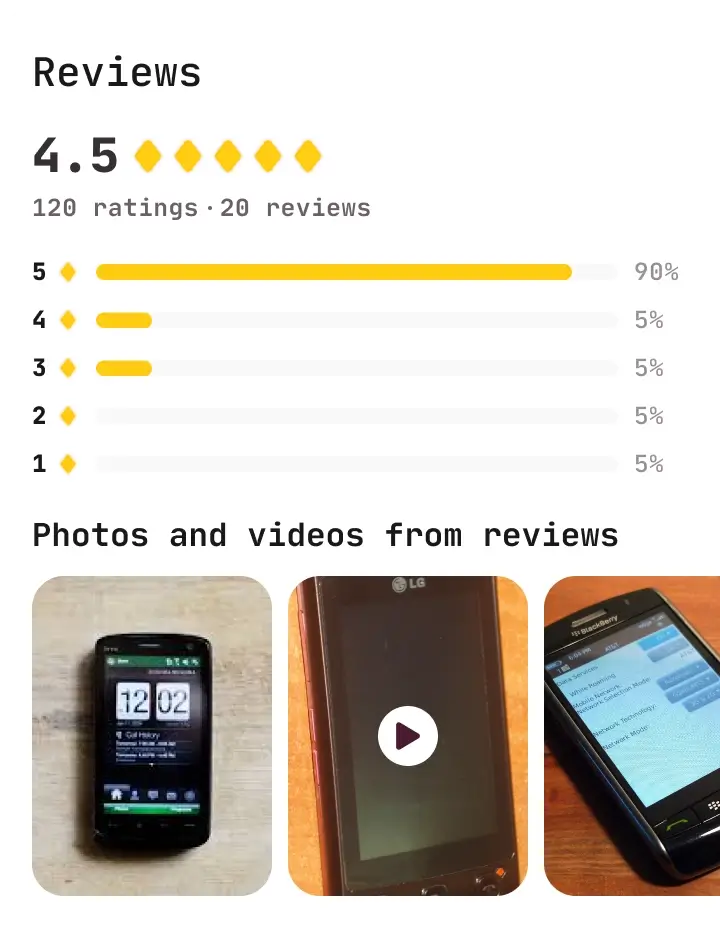
Instead, shoppers have shifted their trust to photos. Those grainy, poorly lit images uploaded by real buyers in their reviews come across as genuine. Several participants mentioned that they often skip the product images altogether and head straight for the review photos. One participant even described it as searching for proof that the product had actually been used by someone.
What this means if you're building for India
When it comes to designing review systems, the natural instinct is to highlight the strongest signals: the highest ratings, the most reviews, and verified buyers. While that is a valid instinct, there is more nuance to that.
Embracing imperfection can actually be a strength. Products showing a range of ratings and having seller responses to critical reviews feel more authentic than a spotless 5.0. So, don’t over-optimize for perfect ratings at the cost of the richness of the reviews.
Buyer photos should be front and center, not just an afterthought tucked away. Showcasing them prominently can build trust far more effectively than any fancy professional photography could. We now emphasize on this prominently in our own work.
Prioritize detailed reviews that provide enough insight as the “verified buyer” tag alone doesn’t cut it anymore. Users know that these verification systems can be manipulated. What they really want are to prove the reviewer has genuinely used the product.
The 5-star trap reflects a global trend in user ratings, as consumers have become wary of the very signals meant to guide them.
This kind of insight makes it worthwhile to navigate these familiar waters.